- 0 ft
- 20 ft
- 40 ft
- 60 ft
- 80 ft
- 100 ft
The reef
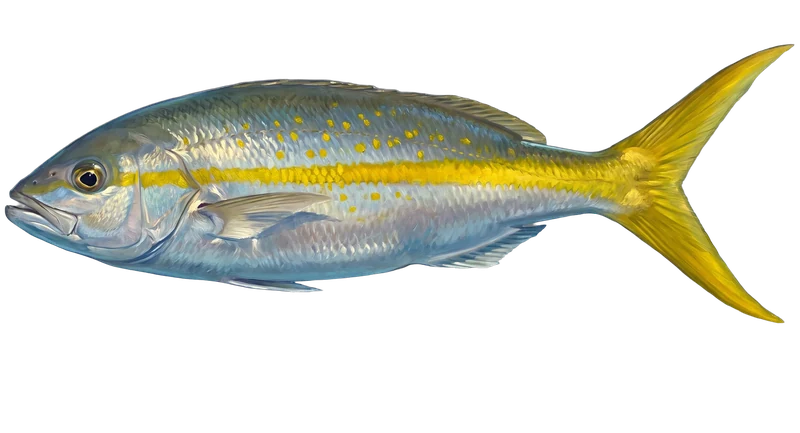
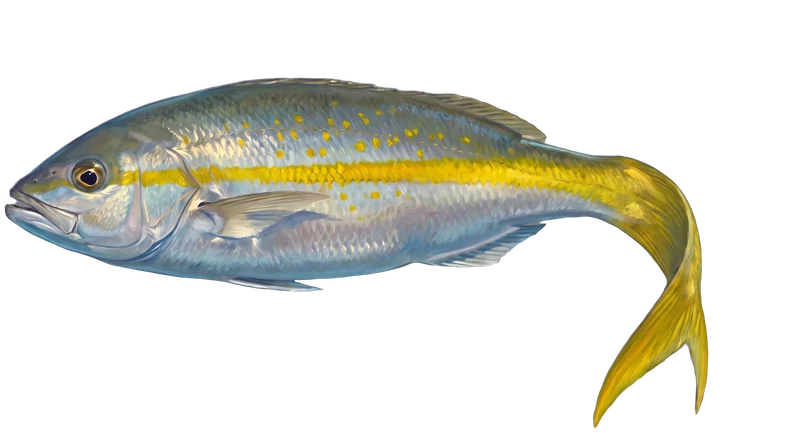
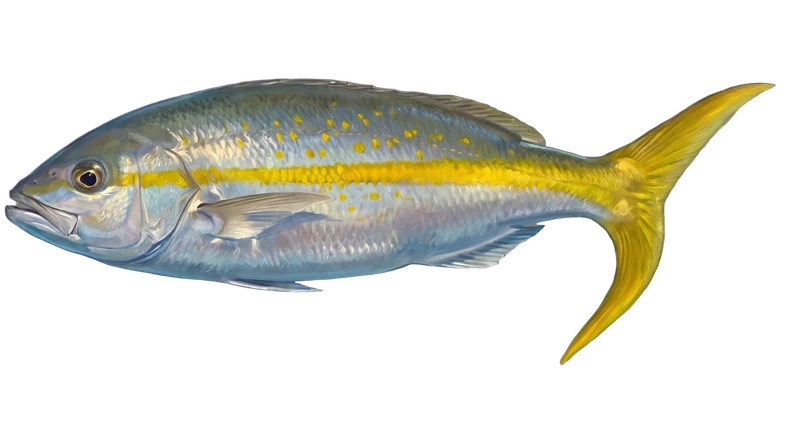
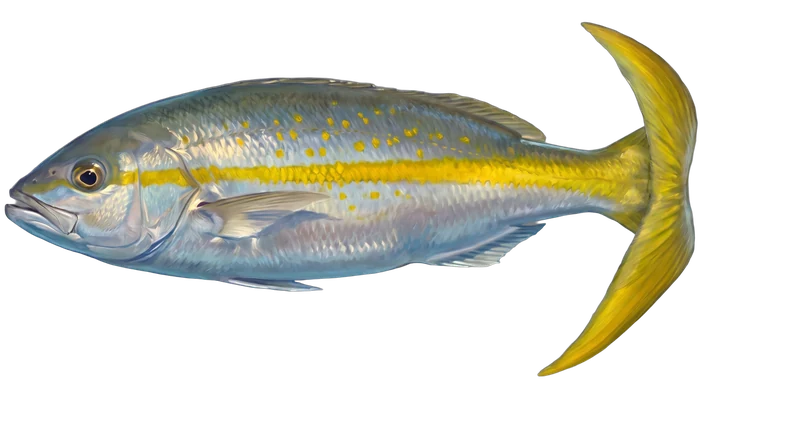
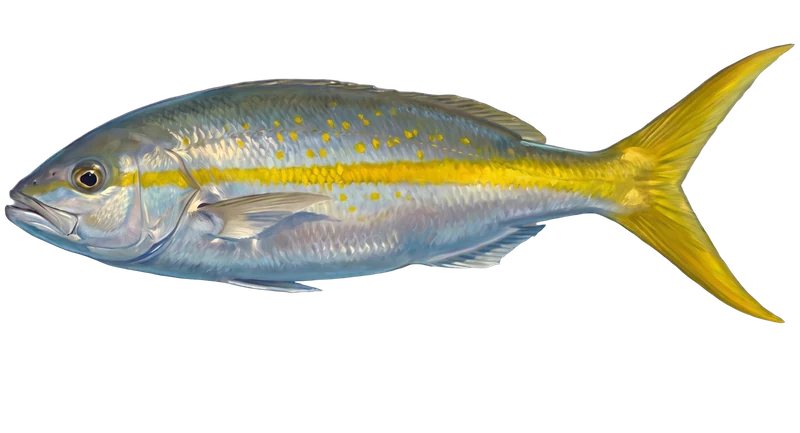
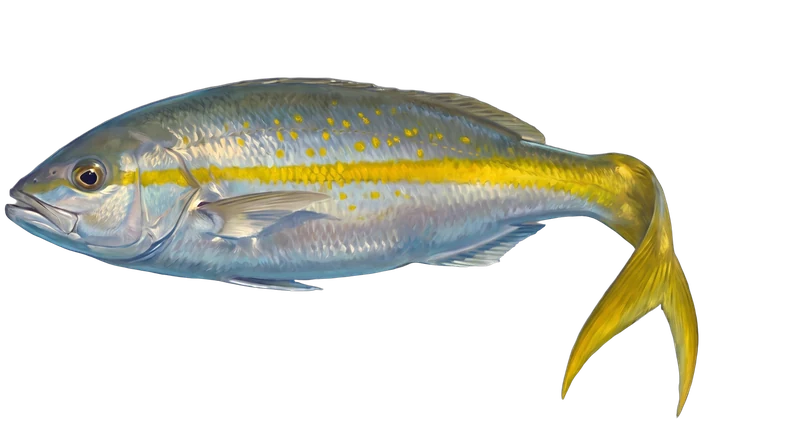
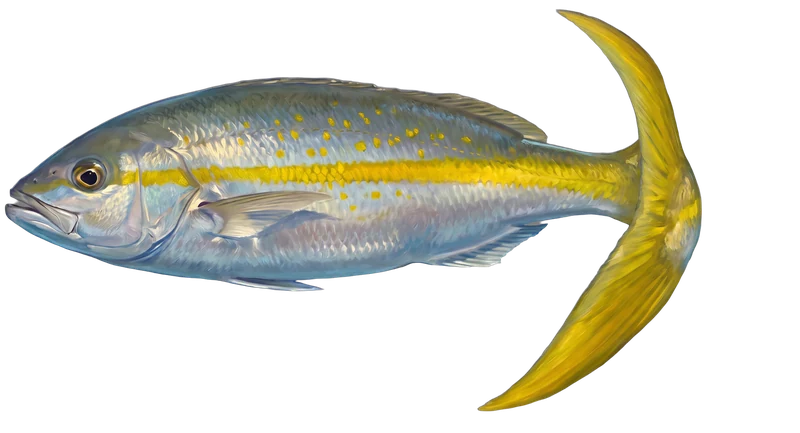
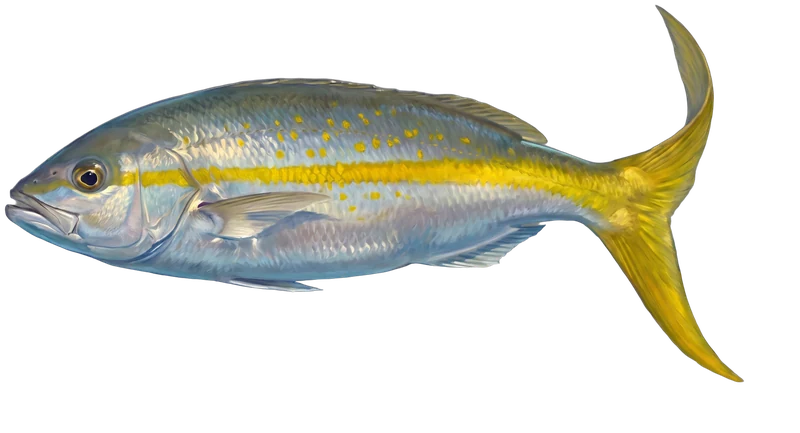
Yellowtail Snapper
Ocyurus chrysurus
Depth0–100 ft
A reliable reef target year-round, and the easiest good eating to bring back to the dock.
- Typical2–5 lb8–16 in
- Largest recorded11 lb2 ft 10 in
- Depth range0–590 ftspecies-wide
- IGFA all-tackle11 lbChallenger Bank, Bermuda · 2004
How big, really
A yellowtail snapper and a six-foot adult, drawn to one scale.
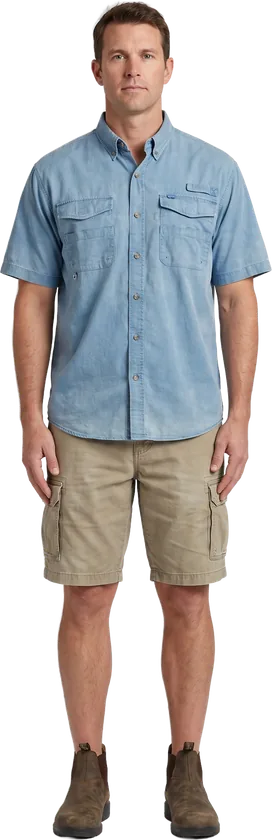
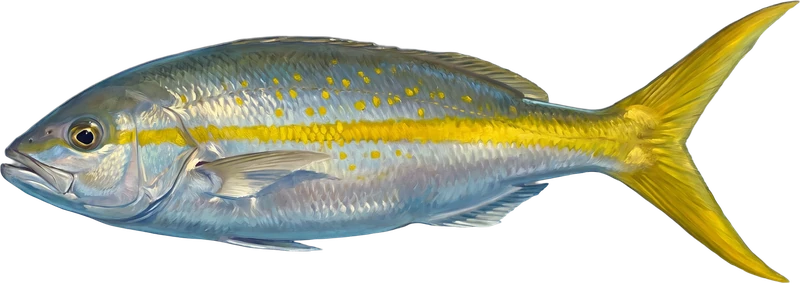
Yellowtail Snapper · Typical size · 8–16 in — drawn at 1 ft 4 invsAdult · 6 ft
Yellowtail Snapper · Largest recorded · 2 ft 10 in (34 in)vsAdult · 6 ft
The yellowtail snapper year
Twelve months around the dial, straight from the island's season data — peak months reach the outer ring. Pick a month to see what else is running. Peak: Jun, Jul, Aug.
PeakJun–Aug
March — Yellowtail Snapper is good
Also running this month
- BonefishPeak
- PermitPeak
- Blue MarlinGood
- Mahi (Dolphin)Good
- SailfishGood
- WahooGood
April — Yellowtail Snapper is good
Also running this month
- Blue MarlinPeak
- BonefishPeak
- Mahi (Dolphin)Peak
- PermitPeak
- SailfishPeak
May — Yellowtail Snapper is good
Also running this month
- Blue MarlinPeak
- Bluefin TunaPeak
- BonefishPeak
- Mahi (Dolphin)Peak
- PermitPeak
- SailfishPeak
- TarponGood
June — Yellowtail Snapper is peak
Also running this month
- Blue MarlinPeak
- BonefishPeak
- GrouperPeak
- Mahi (Dolphin)Peak
- PermitPeak
- TarponPeak
- Bluefin TunaGood
- SailfishGood
July — Yellowtail Snapper is peak
Also running this month
- Blue MarlinPeak
- BonefishPeak
- GrouperPeak
- PermitPeak
- TarponPeak
- Mahi (Dolphin)Good
August — Yellowtail Snapper is peak
Also running this month
Field notes
- How it is fished
- Chumming the reef: guides deploy a menhaden chum slick (often cut with rolled oats) to draw fish up in the water column, then anglers present small (1/32-1/16 oz), light-colored jigs or light-tackle bait rigs on the slick — the 'sand-balling' technique disguises the hook inside a sinking chum ball. Typically fished in 30-120 ft.
- What it eats
- A mix of plankton and benthic prey — small fish, crustaceans, worms, gastropods, and cephalopods — taken mainly at night; juveniles feed primarily on plankton.
- Depth
- FishBase: 0-590 ft overall range, most commonly 33-230 ft.
- Worth knowing
- Unlike most snappers, which hug the bottom, yellowtail snapper school well up in open water above the reef — an atypical trait for the snapper family (Lutjanidae) that makes them well suited to chumming.
- Conservation & rules
- IUCN Red List status: Data Deficient (listed since 2016) — not identified as a threatened species. No yellowtail-specific Bahamas size limit was found; the species falls under a general Bahamas demersal reef-fish bag limit reported at 60 lb or 20 fish per vessel (whichever is less) for snappers and groupers combined, per secondary aggregator sources — not independently confirmed against an official Bahamas government document.
The record
11 lbIGFA all-tackle world record
Angler William B. DuVal · Challenger Bank, Bermuda · 2004
Where it lives
The island's relief model with the reef lit — 10–60 ft, patch coral and hard bottom. Drag it to change the angle.








The Bimini story
Yellowtail snapper is a reliable, year-round reef target at Bimini and the easiest good eating an angler can bring back to the dock. A fly-tackle line-class IGFA record for the species was set at Bimini in 2017 (1 lb 8 oz, Austin Porter).
A fly-tackle line-class record (not all-tackle) for yellowtail snapper was set at Bimini, Bahamas: 1 lb 8 oz, Austin Porter, July 15, 2017.
Sources
What we could not verify (2)
- IUCN status page not directly accessed (Data Deficient figure from aggregated secondary citation).
- Bahamas demersal bag limit (60 lb/20 fish) — secondary aggregator source, not an official government PDF.