- 0 ft
- 1 ft
- 2 ft
- 3 ft
- 4 ft
- 5 ft
The flats
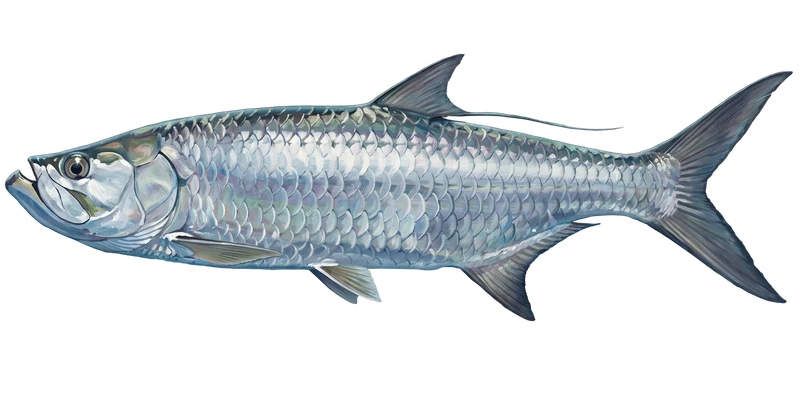
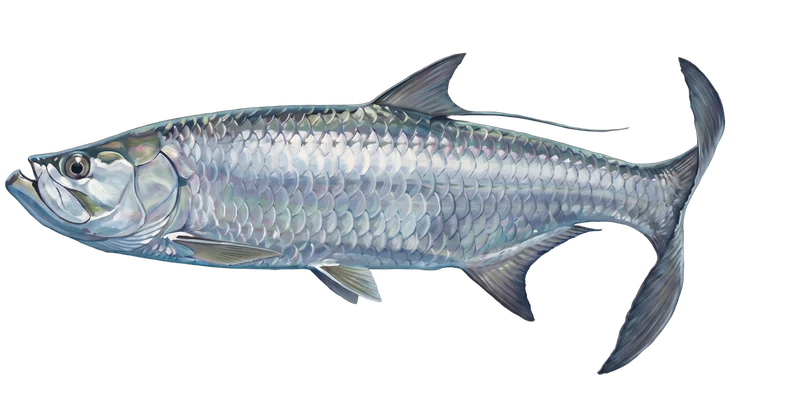
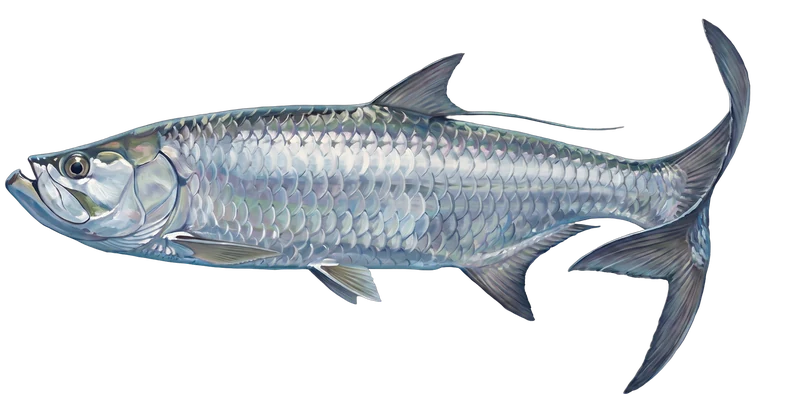
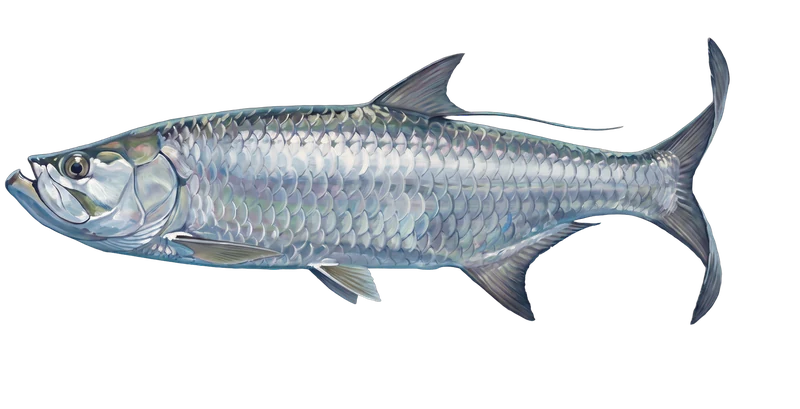
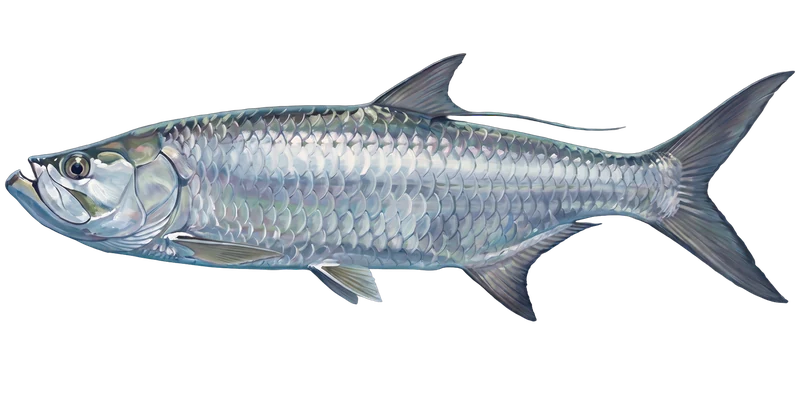
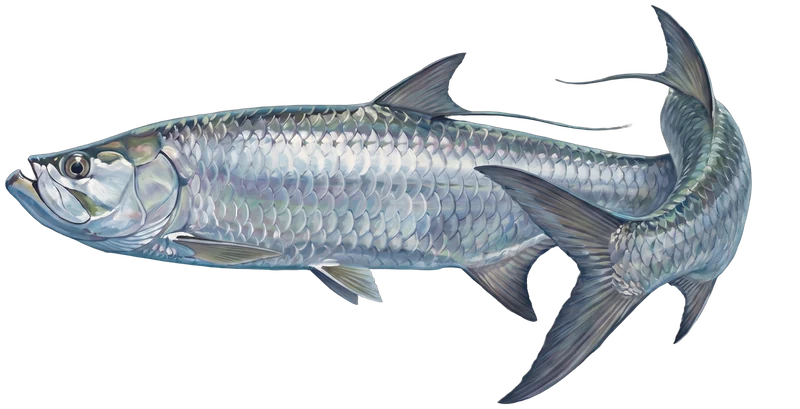
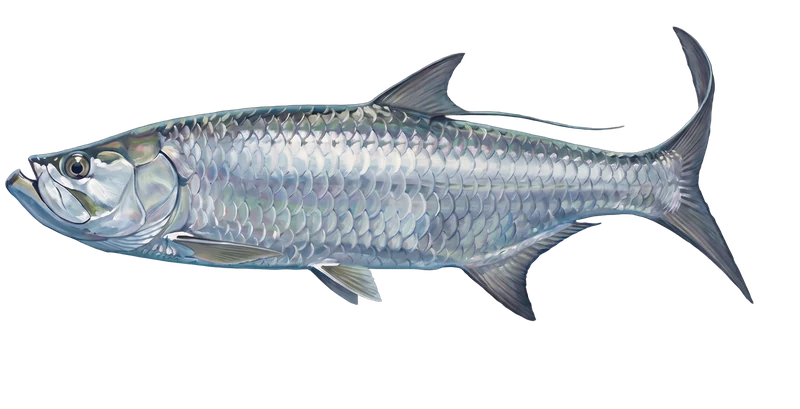
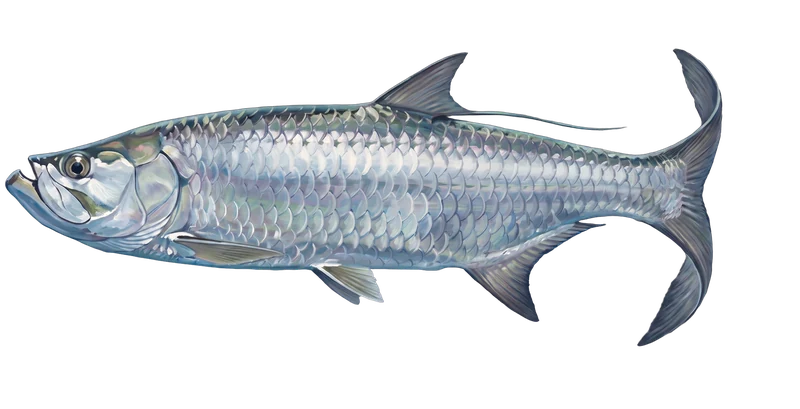
Tarpon
Megalops atlanticus
Depth0–5 ft
Smaller tarpon work the channels and mangrove edges, peaking in the warm months.
- Largest recorded355 lb8 ft 2 in
- Depth range0–98 ftspecies-wide
- IGFA all-tackle286 lb 9 ozRubane, Guinea-Bissau, Africa · 2003
How big, really
A tarpon and a six-foot adult, drawn to one scale.
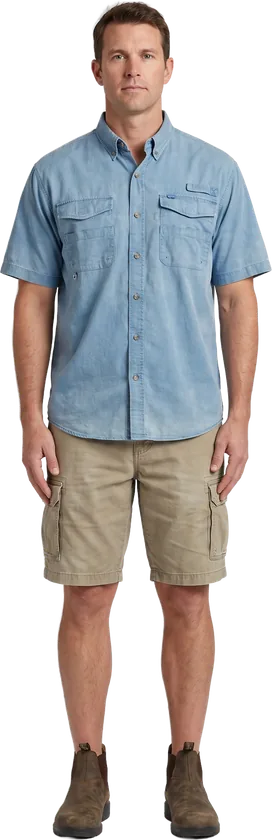
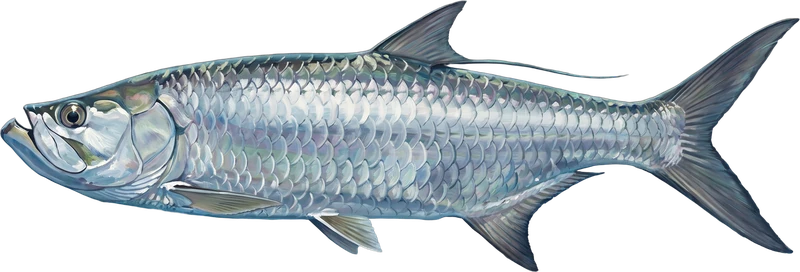
Tarpon · Largest recorded · 8 ft 2 in (98 in)vsAdult · 6 ft
The tarpon year
Twelve months around the dial, straight from the island's season data — peak months reach the outer ring. Pick a month to see what else is running. Peak: Jun, Jul, Aug.
PeakJun–Aug
January — Tarpon is off season
Also running this month
- BonefishPeak
- WahooPeak
- PermitGood
- Yellowtail SnapperGood
February — Tarpon is off season
Also running this month
- BonefishPeak
- WahooPeak
- PermitGood
- Yellowtail SnapperGood
March — Tarpon is off season
Also running this month
- BonefishPeak
- PermitPeak
- Blue MarlinGood
- Mahi (Dolphin)Good
- SailfishGood
- WahooGood
- Yellowtail SnapperGood
April — Tarpon is off season
Also running this month
- Blue MarlinPeak
- BonefishPeak
- Mahi (Dolphin)Peak
- PermitPeak
- SailfishPeak
- Yellowtail SnapperGood
May — Tarpon is good
Also running this month
- Blue MarlinPeak
- Bluefin TunaPeak
- BonefishPeak
- Mahi (Dolphin)Peak
- PermitPeak
- SailfishPeak
- Yellowtail SnapperGood
June — Tarpon is peak
Also running this month
- Blue MarlinPeak
- BonefishPeak
- GrouperPeak
- Mahi (Dolphin)Peak
- PermitPeak
- Yellowtail SnapperPeak
- Bluefin TunaGood
- SailfishGood
July — Tarpon is peak
Also running this month
- Blue MarlinPeak
- BonefishPeak
- GrouperPeak
- PermitPeak
- Yellowtail SnapperPeak
- Mahi (Dolphin)Good
August — Tarpon is peak
Also running this month
- BonefishPeak
- GrouperPeak
- PermitPeak
- Yellowtail SnapperPeak
November — Tarpon is off season
Also running this month
- BonefishPeak
- WahooPeak
- PermitGood
- Yellowtail SnapperGood
December — Tarpon is off season
Also running this month
- BonefishPeak
- WahooPeak
- PermitGood
- Yellowtail SnapperGood
Field notes
- How it is fished
- Guides live-bait (mullet, pinfish, crabs, shrimp) or fly-fish channels, deep cuts, and mangrove/bridge edges where tidal current concentrates baitfish. Tarpon are known for explosive, aerial 'silver king' fights, often leaping up to 10 ft out of the water.
- What it eats
- Fish (mullet, pinfish, marine catfishes, needlefish, sardines) and crustaceans (shrimp, crabs), typically swallowed whole; larvae absorb dissolved nutrients directly from the water, and juveniles eat zooplankton.
- Depth
- FishBase: 0-40 m (0-131 ft), usually 0-15 m (0-49 ft).
- Worth knowing
- Tarpon have a modified, highly vascularized swim bladder that functions as an accessory air-breathing organ, letting them gulp air at the surface and survive in low-oxygen, stagnant, brackish or fresh water. They are also remarkably long-lived: males can exceed 30 years and females can exceed 50, with one captive female documented living to 63.
- Conservation & rules
- IUCN Red List: Vulnerable, decreasing population trend (corroborated via secondary sources; primary IUCN page could not be directly fetched, 403 error). The 2017 Bahamas Flats Fishing Regulations name tarpon explicitly alongside bonefish, permit, snook, and cobia as catch-and-release-only on the flats, with commercial flats fishing banned and an angler license required. The U.S. recreational tarpon fishery is also largely catch-and-release, with ongoing NOAA-adjacent research into post-release mortality.
The record
286 lb 9 ozIGFA all-tackle world record
Angler Max Domecq · Rubane, Guinea-Bissau, Africa · 2003
Where it lives
The island's relief model with the flats lit — 0–3 ft, gin-clear over white sand. Drag it to change the angle.








The Bimini story
Smaller tarpon work Bimini's channels and mangrove edges, peaking in the warm months, per longstanding local guide reputation — but no specific IGFA record or major tournament tied to Bimini tarpon could be verified.
Sources
What we could not verify (3)
- Typical angler-catch length/weight range.
- Any Bimini-specific tarpon record or tournament connection.
- Primary IUCN Red List page (403 error on direct fetch).