- 0 ft
- 500 ft
- 1,000 ft
- 1,500 ft
- 2,000 ft +
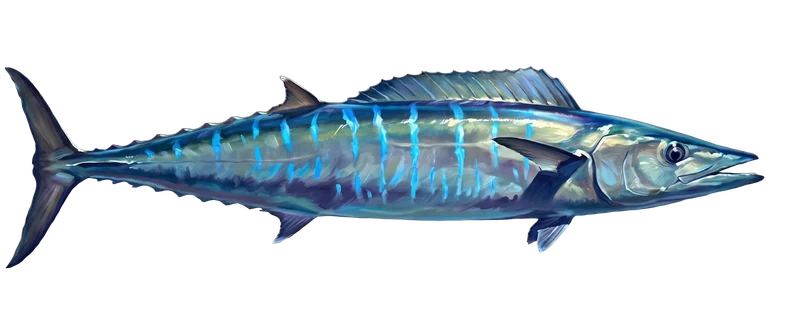
Bluewater
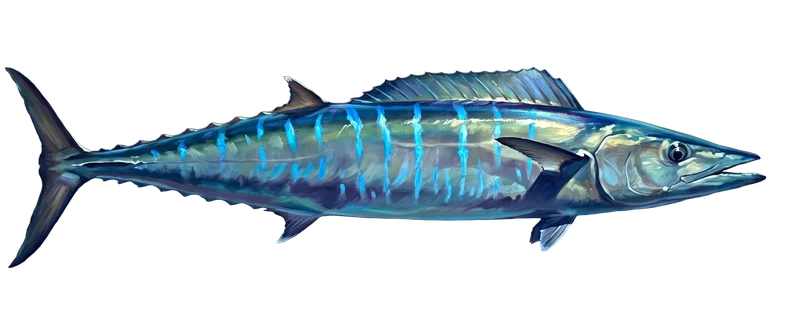
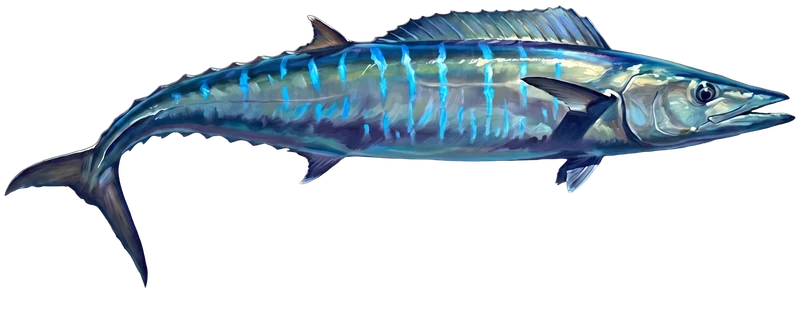
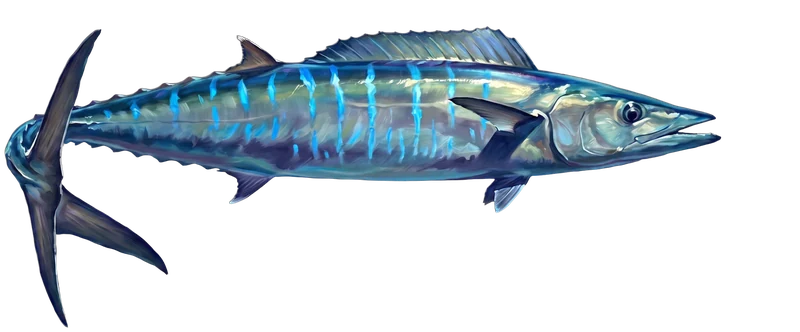
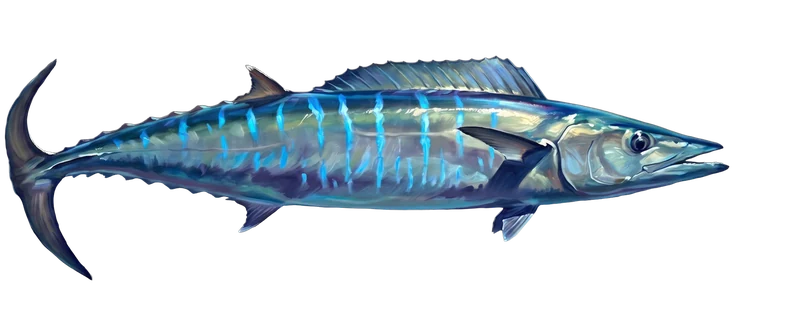
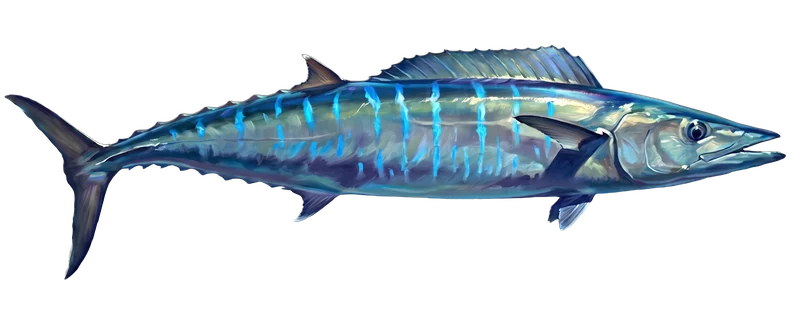
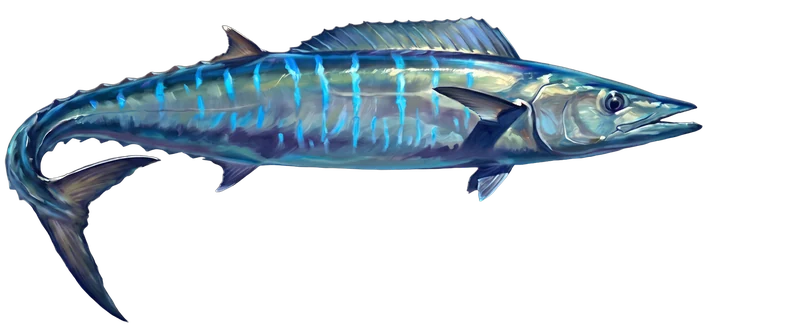
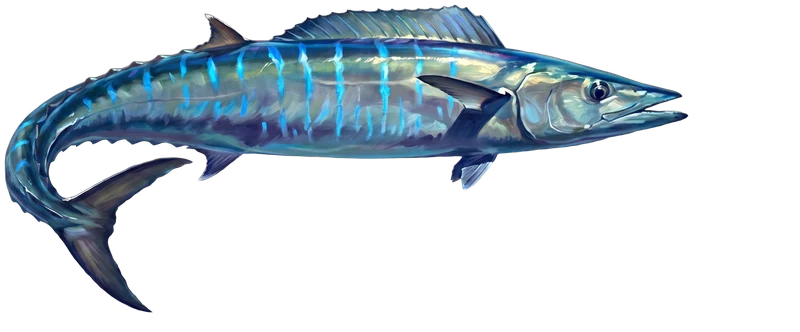
Wahoo
Acanthocybium solandri
Depth0–2,000 ft +
The winter catch du jour. November through February is prime, with the Wahoo Smackdown series running out of the Big Game Club.
- Typical20–60 lb40–65 in
- Largest recorded184 lb8 ft 2 in
- Depth range0–830 ftspecies-wide
- IGFA all-tackle184 lbCabo San Lucas, Mexico · 2005
How big, really
A wahoo and a six-foot adult, drawn to one scale.

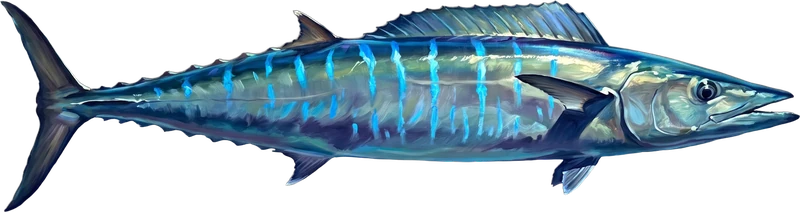
Wahoo · Typical size · 40–65 in — drawn at 5 ft 5 invsAdult · 6 ft
Wahoo · Largest recorded · 8 ft 2 in (98 in)vsAdult · 6 ft
The wahoo year
Twelve months around the dial, straight from the island's season data — peak months reach the outer ring. Pick a month to see what else is running. Peak: Jan, Feb, Nov, Dec.
PeakNov–Feb
March — Wahoo is good
Also running this month
- BonefishPeak
- PermitPeak
- Blue MarlinGood
- Mahi (Dolphin)Good
- SailfishGood
- Yellowtail SnapperGood
April — Wahoo is off season
Also running this month
- Blue MarlinPeak
- BonefishPeak
- Mahi (Dolphin)Peak
- PermitPeak
- SailfishPeak
- Yellowtail SnapperGood
May — Wahoo is off season
Also running this month
- Blue MarlinPeak
- Bluefin TunaPeak
- BonefishPeak
- Mahi (Dolphin)Peak
- PermitPeak
- SailfishPeak
- TarponGood
- Yellowtail SnapperGood
June — Wahoo is off season
Also running this month
- Blue MarlinPeak
- BonefishPeak
- GrouperPeak
- Mahi (Dolphin)Peak
- PermitPeak
- TarponPeak
- Yellowtail SnapperPeak
- Bluefin TunaGood
- SailfishGood
July — Wahoo is off season
Also running this month
- Blue MarlinPeak
- BonefishPeak
- GrouperPeak
- PermitPeak
- TarponPeak
- Yellowtail SnapperPeak
- Mahi (Dolphin)Good
August — Wahoo is off season
Also running this month
- BonefishPeak
- GrouperPeak
- PermitPeak
- TarponPeak
- Yellowtail SnapperPeak
September — Wahoo is off season
Also running this month
- BonefishPeak
- PermitGood
- TarponGood
- Yellowtail SnapperGood
Field notes
- How it is fished
- High-speed trolling (12-18 knots) with skirted lures (e.g., blue/white Ilanders) over rigged horse ballyhoo, or slower trolling (5-8 knots) with ballyhoo behind sea witches, run at varying depths/distances across drop-offs, temperature breaks, weedlines, and structure edges, typically in 120-350 ft of water; wire leaders and shock cords are used to survive the violent first strike.
- What it eats
- Fish and squid. NOAA names squid, frigate mackerel, butterfish, porcupine fish, and round herring as specific prey. A Western/Central Pacific diet study found roughly 85% fish, 14% cephalopods, and 1% crustaceans by contents.
- Depth
- FishBase lists wahoo as usually occupying 0-39 ft (rarely to 66 ft) near the surface, reflecting where they're typically caught trolling. But tagging studies show far greater capability: a western North Atlantic study found tagged wahoo spent 90% of time shallower than about 650 ft with regular quick deeper dives; an eastern Pacific tagging study recorded a maximum dive of 830 ft (253 m).
- Worth knowing
- Wahoo are famous for blistering speed, but the exact numbers are murkier than fishing lore suggests. The most consistently cited instrumented figure is a tagged 113 cm wahoo recorded at 48 mph (77 km/h) in a burst within the first 10 seconds of a run; the widely repeated claim of 60 mph or more could not be traced to a specific peer-reviewed source and should be treated as an unconfirmed but commonly claimed figure. What is well supported qualitatively is that wahoo have one of the fastest, most powerful initial runs of any gamefish.
- Conservation & rules
- IUCN Red List: Least Concern (most recent assessment 2007). No U.S. Endangered Species Act listing. Life history supports resilience to fishing pressure: short-lived (5-6 years), matures around age 1, and highly fecund (NOAA: 500,000-45 million eggs per year). No wahoo-specific Bahamas closed season or minimum size limit was found; a general pelagic/migratory species bag limit (kingfish, dolphin, tuna, wahoo) of 18 fish per vessel is referenced by secondary sources but was not independently confirmed against an official Bahamas government PDF.
The record
184 lbIGFA all-tackle world record
Angler Sara Hayward · Cabo San Lucas, Mexico · 2005
Where it lives
The island's relief model with bluewater lit — 2,000 ft +, the Gulf Stream edge, a mile off the beach. Drag it to change the angle.








The Bimini story
Wahoo is Bimini's signature winter catch. November through February is prime season, headlined by the annual Wahoo Smackdown tournament series run out of the Bimini Big Game Club. These are tournament weigh-ins, not IGFA-certified world records: notable results include a 96.7 lb fish (Team Fishin A Loan, Wahoo Smackdown II, Feb 2013, 132 wahoo caught tournament-wide), a fish over 84 lb with 150+ anglers landing 3,253.5 lb total (Wahoo Smackdown VIII, 2016), and a 52.7 lb top fish with 108 fish/about 1,500 lb total (Wahoo Smackdown XI, 2019). Separately, the closest IGFA-certified record to Bimini is the Men's 130 lb line-class record (149 lb) caught at neighboring Cat Cay in 1962.
The all-tackle record itself is not from the Bahamas, but the Men's 130 lb line-class wahoo record — 149 lb, John Pirovano, June 15, 1962 — was caught at Cat Cay, immediately adjacent to Bimini in the same island group. Additional women's line-class records (74-153.5 lb) were set at San Salvador, Bahamas, in 1996.
Sources
- fishbase.se
- fisheries.noaa.gov
- igfa.org
- ncseagrant.ncsu.edu
- floridasportfishing.com
- coastalanglermag.com
- saltwatersportsman.com
What we could not verify (2)
- Exact top speed (48 mph is the most consistently cited instrumented figure; 60 mph+ is commonly claimed but untraceable to a primary source).
- Bahamas pelagic species bag limit of 18 fish per vessel (secondary-source only, not confirmed against an official government PDF).